
 Shopping Cart


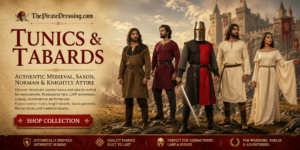
Throughout history, Tunics & Tabards have been among the most recognizable garments worn across medieval Europe. From noble courts and military camps to village marketplaces and religious communities, these versatile garments served both practical and symbolic purposes. Today, they remain a favorite choice for historical reenactors, LARP participants, Renaissance fair visitors, theater productions, and medieval fashion enthusiasts.
Whether you are looking for an authentic Saxon tunic, a Norman-style garment, a Celtic dress, or a knightly tabard, the world of medieval clothing offers a wide range of options to suit every historical period and character.
What Are Tunics & Tabards?
A tunic is a simple yet functional garment traditionally worn by men and women throughout the medieval era. Usually extending from the shoulders to the knees or lower, tunics were designed for comfort, mobility, and practicality.
A tabard, on the other hand, is a sleeveless outer garment often worn over armor or clothing. Historically, tabards displayed heraldic symbols, family crests, or military insignia, making them an important part of medieval identity.
Today, both garments continue to play a significant role in historical costume recreation and medieval-inspired fashion.
The History of Medieval Tunics
The tunic has roots dating back to ancient civilizations, including Roman, Celtic, and Germanic cultures. During the Middle Ages, tunics evolved into a staple garment worn by nearly every social class.
Early Medieval Tunics
Early medieval tunics were typically made from wool or linen and featured simple cuts with minimal decoration. Saxons, Vikings, and other northern European cultures preferred durable designs that could withstand harsh weather conditions.
Features included:
- Long sleeves
- Knee-length construction
- Natural fabric materials
- Functional belts and fastenings
- Simple embroidery or trim
High Medieval Tunics
As society developed, tunics became more elaborate. Wealthier individuals wore garments featuring:
- Decorative embroidery
- Rich colors
- Fine linen and wool
- Contrasting trims
- Tailored silhouettes
These designs reflected social status while maintaining comfort and practicality.
Understanding Medieval Tabards
Tabards became especially prominent during the later medieval period. Knights and soldiers often wore them over armor to identify themselves during battle.
Purpose of Tabards
Medieval tabards served several important functions:
✔ Displaying family heraldry
✔ Identifying military allegiance
✔ Protecting armor from sun and weather
✔ Enhancing ceremonial appearances
✔ Creating a striking visual presence
Today, tabards remain highly popular among reenactors, cosplayers, and LARP enthusiasts who want to achieve an authentic medieval look.
Popular Styles of Tunics & Tabards
🏰 Saxon Tunics
Saxon tunics are known for their practical design and understated elegance. Typically featuring earth-tone colors and straightforward cuts, they are ideal for portraying early medieval characters.
Popular choices include:
- Hooded Saxon tunics
- Wool Saxon garments
- Noble Saxon attire
- Warrior-inspired designs
⚔ Norman Tunics
Norman fashion introduced more structured silhouettes and refined details. These tunics often feature decorative trims and longer cuts suitable for noble or military portrayals.
Benefits include:
- Historical authenticity
- Comfortable wear
- Versatile styling options
- Excellent layering potential
🛡 Knight Tabards
Knight tabards are among the most iconic pieces of medieval clothing. Worn over chainmail or armor, these garments instantly create the appearance of a medieval warrior.
Key characteristics:
- Sleeveless design
- Heraldic symbols
- Durable construction
- Battle-ready appearance
🌿 Celtic Tunics
Celtic garments emphasize natural beauty and flowing silhouettes. Their simple yet elegant design makes them popular for historical events and fantasy settings alike.
🏛 Roman-Inspired Tunics
Roman tunics influenced many medieval clothing styles and continue to be favored for historical reenactment and theatrical performances.
Why Choose Authentic Tunics & Tabards?
Investing in quality Tunics & Tabards offers numerous advantages.
Historical Accuracy
Authentic garments help create believable and immersive historical portrayals. Whether attending a Renaissance fair or participating in a reenactment, accurate clothing enhances the overall experience.
Comfort and Practicality
Many modern reproductions use breathable materials such as:
- Linen
- Cotton blends
- Wool
- Rayon-viscose fabrics
These materials provide comfort while maintaining historical aesthetics.
Versatility
One of the greatest benefits of medieval tunics is their versatility. A single tunic can be styled in multiple ways depending on accessories, belts, cloaks, and footwear.
Durability
Well-crafted tunics and tabards are built to withstand repeated wear, making them suitable for festivals, conventions, LARP events, and theatrical productions.
Best Occasions to Wear Tunics & Tabards
🎭 Renaissance Fairs
Renaissance fairs are among the most popular venues for medieval attire. Tunics and tabards provide an authentic appearance while remaining comfortable throughout the day.
⚔ Historical Reenactments
Historical societies often require period-appropriate clothing. Authentic medieval tunics help participants accurately represent their chosen era.
🏹 Live Action Role Play (LARP)
LARP players frequently choose tunics because they can easily adapt to various character types, including:
- Knights
- Mercenaries
- Nobles
- Merchants
- Priests
- Adventurers
🎬 Theater and Film Productions
Costume departments rely heavily on tunics and tabards to recreate historical settings with visual authenticity.
🎃 Cosplay and Fantasy Events
Many fantasy characters draw inspiration from medieval fashion, making tunics and tabards an excellent choice for conventions and cosplay gatherings.
How to Style Medieval Tunics & Tabards
Creating a complete medieval outfit is simple when combining the right accessories.
Essential Accessories
- Leather belts
- Medieval boots
- Hooded cloaks
- Pouches
- Bracers
- Historical jewelry
- Period headwear
Layering these accessories can significantly enhance the authenticity of your costume.
Choosing the Right Tunic or Tabard
When selecting a garment, consider the following:
Fabric
Choose materials that suit your intended use:
- Linen for warm weather
- Wool for colder conditions
- Cotton blends for everyday comfort
Length
Different historical periods favored varying lengths. Researching your chosen era can help ensure accuracy.
Character Type
Your role may influence your clothing choice:
- Noble characters often wear decorative tunics.
- Warriors benefit from practical tabards.
- Clergy typically wear longer garments.
- Commoners prefer simpler designs.
Color Selection
Historically inspired colors include:
- Forest green
- Burgundy
- Brown
- Natural linen
- Deep blue
- Black
- Mustard yellow
Conclusion
Tunics & Tabards remain an essential part of medieval fashion and historical costume culture. Their rich history, practical design, and timeless appeal make them ideal for reenactments, Renaissance fairs, LARP adventures, theatrical productions, and cosplay events.
Whether you prefer the rugged appearance of a Saxon tunic, the elegance of a Norman garment, the flowing style of Celtic attire, or the bold presence of a knight’s tabard, there is a perfect option for every medieval enthusiast. By choosing authentic materials, accurate designs, and complementary accessories, you can create a memorable historical look that stands out at any event.

